GS-391 VAAS Reflectance Tester
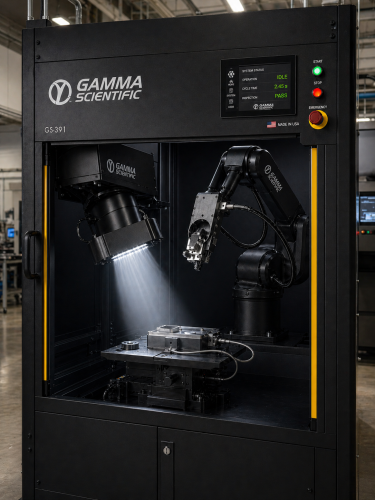
The Gamma Scientific GS-391 Variable Aperture Annulus Sphere Reflectance Tester is the first and only reflectance testing technology that enables automated spectral reflectance measurement for advanced displays and optical surfaces. Designed to separate and quantify specular reflection, haze, and Lambertian reflectance, the GS-391 provides a faster, more automated alternative to traditional BRDF-based methods.
Using a variable aperture annulus light source, precision detection optics, and automated robotic positioning, the GS-391 enables manufacturers and researchers to evaluate how display surfaces perform under real-world lighting conditions—supporting the development of higher-contrast, lower-glare, and more readable displays.
-
Component Separation
Separates specular, haze, and Lambertian reflectance.
-
Automated Testing
Performs fast, repeatable spectral reflectance measurements.
-
Variable Aperture Sourcey Compatibility
Characterizes reflectance by illumination spot size.
-
Precision Detection Adaptability
Captures wavelength-by-wavelength data with a 0.1° field of view.
-
Display-Focused Design
Supports testing for advanced display and optical surface applications.
-
Streamlined Integration & Analysis
Reduces data processing complexity for easy integration into production and R&D environments.
The Ability to Test Reflectance in Everyday Environments
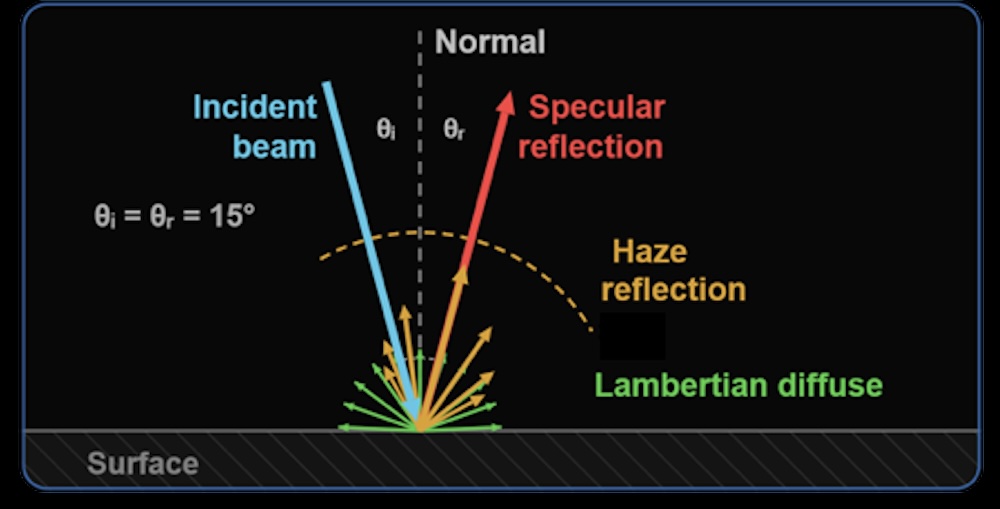
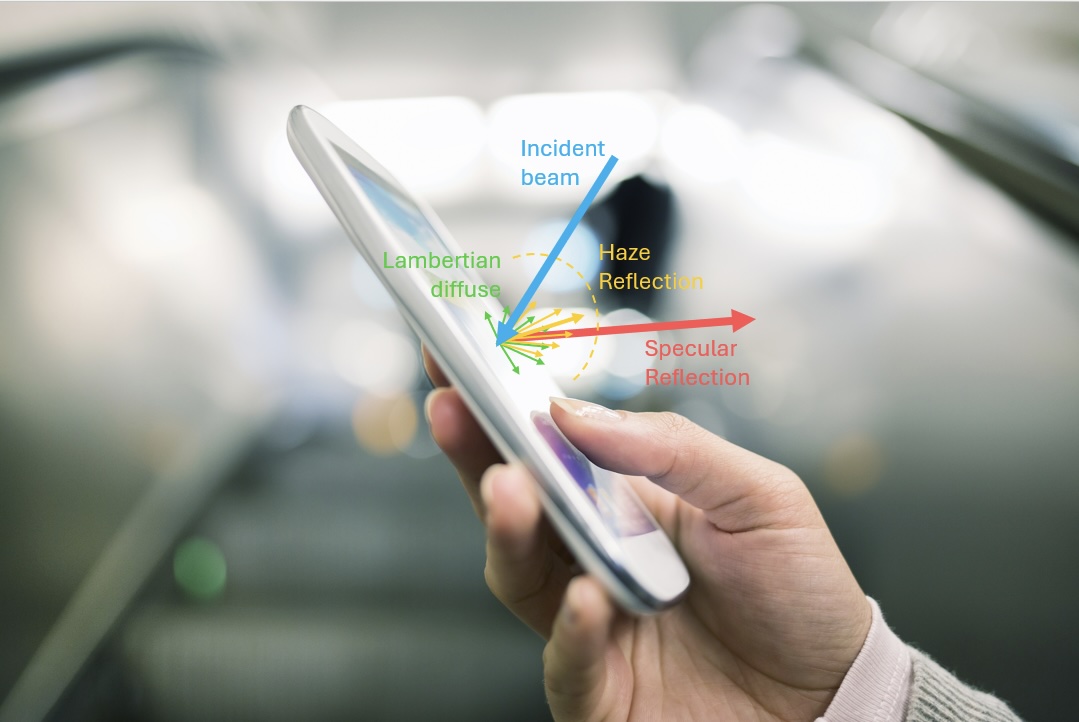
When light hits a surface, it bounces back in three distinct ways: specular (mirror-like reflection), haze (near-specular scattering), and Lambertian (uniform diffuse scattering).
Traditional reflectance measurements often combine these effects into a single value, masking how each one contributes to glare, contrast loss, and perceived display quality. The GS-391 VAAS Reflectance Tester separates and quantifies all three components individually mimicking true optical behavior — revealing how a display will actually perform in real-world environments like direct sunlight, cockpit lighting, surgical suites, automotive interiors, transparent AR optics, and more.



Key Application Areas:
Consumer Electronics: Smartphones, tablets, laptops, and TVs require consistent readability in bright outdoor environments and dim interiors.
Automotive Displays: In-vehicle infotainment, HUDs, and instrument clusters must remain visible in harsh lighting such as sunlight, tunnels, and night driving.
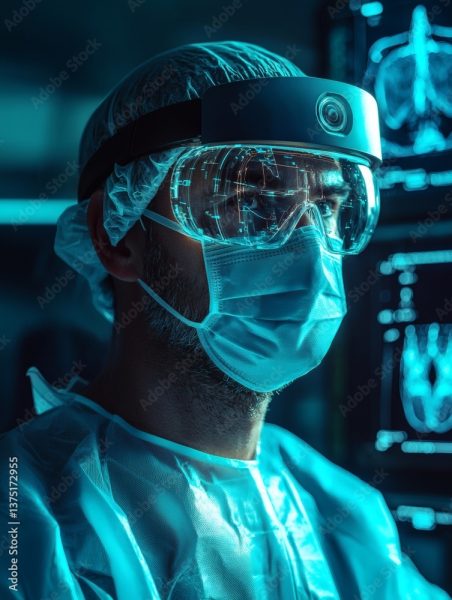
Augmented Reality (AR) & Wearables: AR headsets, helmet visors, and heads-up displays blend digital content with physical environments.
Aerospace & Defense: Cockpit displays, tactical field equipment, and control interfaces require uncompromised readability under extreme lighting conditions.
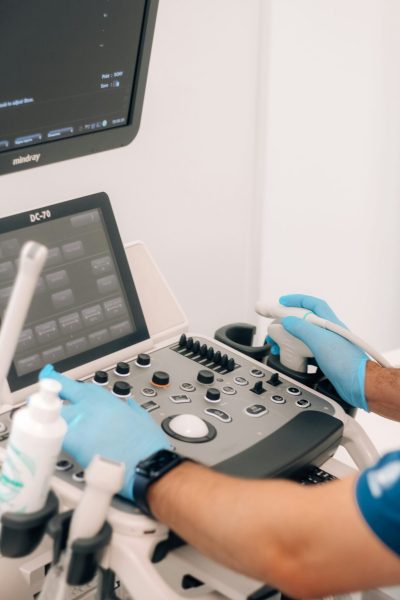
Medical Devices: Surgical monitors, diagnostic screens, and wearable health technologies must deliver color-accurate, high-contrast visuals in diverse lighting environments, including high-glare ORs and patient settings.
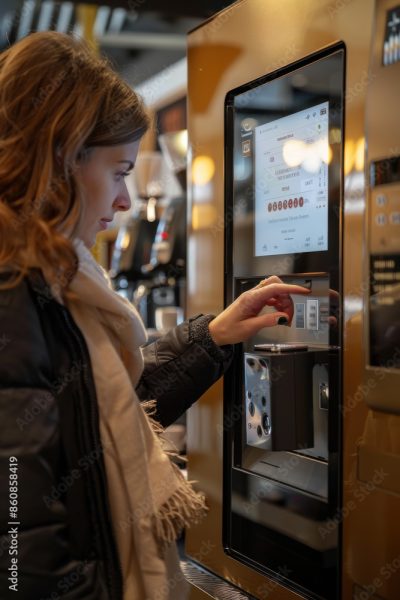
Industrial & Outdoor Systems: Kiosks, point-of-sale systems, and digital signage often operate in high-glare environments such as direct sunlight or warehouse lighting. These applications demand coatings with exceptional anti-reflective and contrast-enhancing properties.
Retail & Showroom Displays: Transparent LCDs used in smart showcases or product displays must balance digital content visibility with the clarity of physical products under controlled but complex lighting
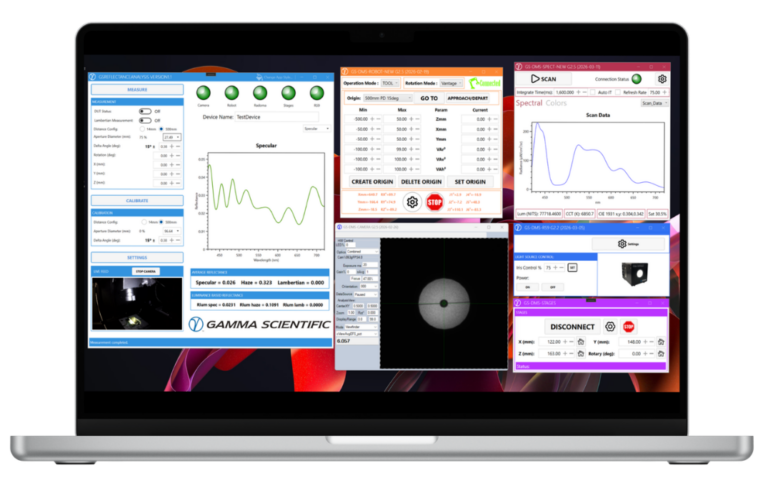
Application Software
With comprehensive software gain control and insight into how a display will be viewed in real-world conditions. You are in control with the software platform determining the environment and parameters, all while viewing the black box testing in progress.